
A good oscillating multi-tool should make flush cuts, plunge cuts, sanding in tight corners, scraping, and grout removal feel straightforward, not like a fight with the tool. The trouble is that specs alone do not tell the whole story, and a model that looks strong on paper can feel awkward in use. This article covers size, power, comfort, and dust control in plain terms, then points to six models that suit different workshops and budgets. Read the buying advice first, then compare the models with the work in mind.
Power and Speed
Power sets how easily the tool moves through dense material without slowing down. Corded models in the 2.2- to 5-amp range handle long cutting sessions without fading, while 18-volt and 20-volt cordless models trade some sustained power for freedom on site. Speed matters too, with many models running from 5,000 to 23,000 oscillations per minute. Variable speed helps, because sanding and scraping need a slower setting than cutting. For most home workshops, a mid-range motor covers the common jobs, and stepping up makes sense only when the work is heavy or constant. A tool that bogs down in the cut usually needs a sharper blade first, not a stronger motor.
Speed ratings and amp ratings work together, and neither tells the whole story alone. A fast motor with a dull blade still cuts slowly, while a sharp blade on a modest motor often finishes the job cleanly. Keep spare blades and accessories on hand, and the power the tool already has will go further.
Corded or Cordless
The corded versus cordless choice shapes how the tool fits a workday. Corded multi-tools run as long as the job lasts and suit workshop and renovation work near power. Cordless models shine for quick cuts in finished rooms, where dragging a cord wastes time, but they need charged batteries on hand for longer sessions. Think about where the work happens most often, how long each session runs, and whether batteries are already part of the workshop. Owners who already own batteries from the same system often get more value from a cordless model.
Battery platforms matter for cordless models, because a battery that fits other tools in the shop is worth more than a slightly stronger motor. For corded models, check the cord length and where the outlet sits relative to the bench. A short cord with an extension cord is workable, but a cord that crosses the work area is a trip hazard.
Comfort, Weight, and Control
Comfort decides whether a tool gets used for long sessions or left on the shelf. A multi-tool vibrates for the whole cut, so grip and balance matter more than weight on paper. Look for a rubber overmolded handle, a slim body that fits in tight spaces, and controls that fall under the thumb without shifting the grip. A tool that is hard to hold steady will wander in a plunge cut. Hold the tool the way it will be used on the job, not just in the store, and check that switches and locks fall under the fingers without shifting the grip. A few minutes of handling before buying can prevent months of frustration.
Vibration and noise add up over a long session, so a tool that feels calm in the hand is worth a closer look. Try the grip with gloves on if that is how the work is done, and check that the weight sits over the work rather than pulling to one side. Small design details, like a well placed switch, show up after the first hour of use.
Dust Collection and a Cleaner Workspace
Dust and debris are part of every job with an oscillating multi-tool, and managing them keeps the work accurate and the shop cleaner. Cutting drywall and sanding with a multi-tool creates fine dust that settles everywhere, so a dust mask and ventilation matter on every indoor job. Some sanding pads include dust extraction holes, and a vacuum held near the cut catches much of the debris. Wipe the work area between steps so dust does not scratch a fresh finish. A clean cut line is easier to follow, and a clean surface takes a finish better, so dust control is worth the small effort it takes.
A vacuum hose or a dust bag adds a step to setup, but it pays off in cleaner cuts and a healthier shop. Fine dust gets into finishes, tools, and lungs, so even a simple bag is better than none. For indoor work, set up dust control before the first cut, not after the room is already coated.
Common Mistakes to Avoid
Most problems with an oscillating multi-tool come from habits rather than from the tool itself. The most common mistake is pushing the blade hard into the cut, which overheats the blade and slows the work. Other frequent errors include using a wood blade on metal, running the tool at full speed for sanding, and starting a plunge cut without marking the line first. Slow down on the first cuts with a new tool, watch how the material responds, and adjust speed and pressure before the job is half done. A short practice run on scrap material often saves a ruined workpiece.
Another mistake is buying on a single feature, like top speed, and ignoring the rest of the tool. Speed, size, comfort, and dust control all shape the result, and a balanced model usually beats a model that excels in one area and falls short in the others. Read the full picture before deciding.
Getting Good Value
Value is not the same as a low sticker, and an oscillating multi-tool shows that clearly. A cheaper tool that wears out fast or needs constant replacement blades and accessories can cost more over a year than a solid mid-range model. Compare motor strength, included accessories, and how easy it is to find replacement blades and accessories, then weigh those against how often the tool will run.
Included accessories change the real cost, because a model that ships with extra blades and accessories or a case may cost less overall than a bare model that needs those items bought separately. Add up the full kit before comparing, and the better value often becomes clear.
Frequently Asked Questions
People often ask whether one multi-tool can replace a saw, a sander, and a scraper. It can handle small jobs in each role, but it is slower than a dedicated tool for large work, so it shines as a problem solver rather than a replacement. Another common question is how long blades last, and the answer is that it depends on the material, with metal and grout wearing blades far faster than softwood. When in doubt, start with a mid-range model that covers the common jobs, learn how it behaves on scrap material, and add specialized blades and accessories as the work demands them.
One more point deserves attention: the right oscillating multi-tool is the one that fits the work, the space, and the hands that will use it. A model that is too large for the bench or too heavy for long sessions will not get used, no matter how strong its motor looks on paper. Compare the six models below with those practical limits in mind, and the choice usually narrows to one or two clear options.
Related products
The six models below cover the main options for this kind of work. Compare size, power, and comfort against the job at hand, and check that replacement blades and accessories are easy to find before deciding.
DEWALT 20V MAX XR Oscillating Multi-Tool

- A brushless motor delivers up to 57 percent more run time than a brushed motor on the same work.
- The three-speed selector and dual-grip variable speed trigger give close control over speed for each application.
- A universal accessory adapter works with most oscillating tool accessory brands, and oscillation runs up to 20,000 oscillations per minute.
CRAFTSMAN V20 Cordless Oscillating Tool
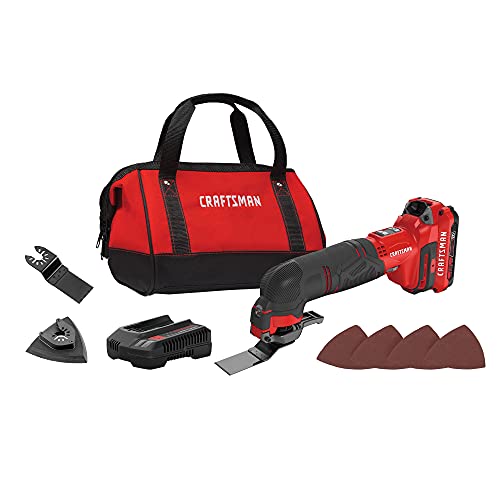
- A variable speed dial gives control over the oscillation rate during each application.
- An LED work light illuminates the work area for better visibility in tight or dim spots.
- A tool-free universal attachment makes blade changes quick, and the tool runs on the CRAFTSMAN 20-volt cordless system.
Hammerhead 2.2-Amp Oscillating Multi-Tool
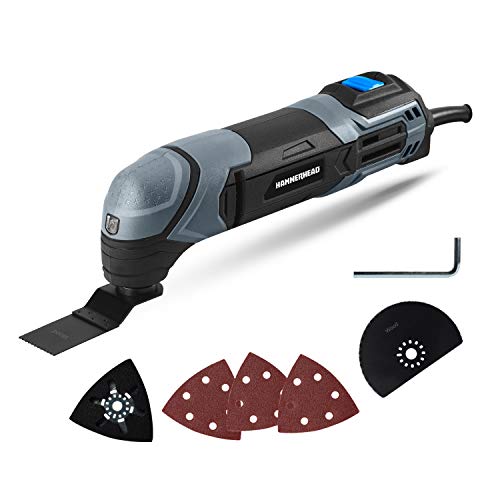
- A 2.2-amp motor delivers up to 20,000 oscillations per minute for cutting, sawing, trimming, grinding, and sanding.
- The compact size and ergonomic soft grip provide steady handling and control.
- A variable speed dial adjusts speed for different applications, and a universal collet system fits standard oscillating blades and accessories.
JORGENSEN Corded Oscillating Multi-Tool

- A 5-degree oscillation angle helps the tool work more efficiently than narrower-angle models.
- The 16-piece accessory set includes flush-cut wood and bi-metal blades, a scraper blade, and more for varied jobs.
- Quick-change attachments with a locking bracket protect fingers during blade changes, and seven speed settings run from 8,000 to 16,000 oscillations per minute.
WORKPRO 3-Amp Oscillating Multi-Tool Kit
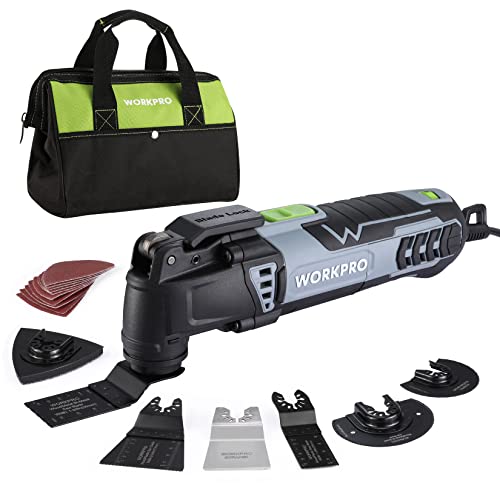
- A 3-amp motor with a 3-degree oscillation angle improves work efficiency for cutting and sawing.
- Seven speed settings range from 15,000 to 23,000 RPM to suit different renovation projects.
- Blade changes take three simple steps with a flip button and no wrench, and the on-off switch on top pairs with an ergonomic design for easy control.
DEKOPRO 20V Cordless Oscillating Tool

- A 20-volt 4-amp-hour cordless tool gives freedom from outlets, with tool-free blade changes.
- Six preset speeds run from 5,000 to 18,000 oscillations per minute through a variable-speed dial.
- A 3.2-degree swing angle cuts faster than narrower models, and an integrated LED light and soft-grip handle improve visibility and comfort.
Prime covers fast, free delivery on eligible items. See whether a Prime free trial is available for your account.
Check Prime on Amazon →



Write Your Review
No reviews yet. Be the first to share your experience!