
When screws get long and wood gets dense, a drill driver starts to struggle and an impact driver takes over. This article walks through what to choose, how to use it, and the mistakes to avoid, then shows six options for the workshop. The six entries below cover a range of torque levels, battery setups, and kit contents. The sections below cover what the tool does, how to choose one, and the care that keeps it working through many projects.
Common Mistakes to Avoid
The most common mistake is using an impact driver to drill clean holes. It can drill with hex-shank bits, but a drill driver gives cleaner, more accurate holes. Another mistake is driving small screws at full speed, which strips heads and splits thin wood. Start slow, and let the impact action build as resistance grows.
Using standard drill bits instead of impact-rated bits is another costly error, because the hammering action cracks brittle bits. Forgetting to check whether a kit includes a battery leads to a stalled project on day one. A short pause before buying, to check what the kit actually includes, avoids most of these problems.
The 1/4-Inch Hex Chuck and Quick Bit Changes
Impact drivers use a 1/4-inch hex chuck instead of a keyed or keyless drill chuck. Bits slide in and lock with a quick-release collar, so changing from a driver bit to a socket adapter takes seconds and often one hand. That speed matters on jobs with many fasteners, where bit changes happen dozens of times.
Hex-shank bits made for impact use hold up better under the hammering action than standard bits. A good set of impact-rated bits, plus a socket adapter for lag bolts, turns the driver into a versatile fastening tool. Keep a few spare bits handy, because a worn bit slips and damages screw heads.
Driving Deck Screws and Lag Bolts
Deck screws and lag bolts are where an impact driver earns its keep. Long screws into dense wood need steady torque, and the impact action keeps the bit seated in the screw head instead of camming out. Start the screw by hand or at low speed, then let the driver take over once the threads bite.
For lag bolts, a socket adapter on the hex chuck does the job, and a pilot hole helps on the longest bolts. Keep the driver square to the fastener so the force goes straight in. With the right technique, a deck or a fence goes together faster, and the screws sit flush without stripped heads.
Battery Care and Runtime
A lithium-ion battery gives an impact driver its freedom, and a little care keeps it working for years. Charge the battery fully before first use, and store it in a cool, dry place away from direct heat. Many sets include two batteries, so one can charge while the other works, which removes the wait in the middle of a project.
Runtime depends on the fasteners: driving short screws uses far less charge than sinking long lag bolts. A tool-only model, sold without a battery, suits someone who already owns batteries on the same battery system. When the driver will sit unused for a while, take the battery out and top it up every few months.
Compact Size and Working in Tight Spaces
Impact drivers are short and light, which helps in tight spaces. A compact body fits between joists, inside cabinets, and behind fixtures where a longer drill cannot turn. Less weight also means less fatigue on overhead work, such as driving screws into ceiling joists or mounting hardware above head height.
A belt hook, where fitted, keeps the driver within reach on a ladder or a roof. An LED light near the chuck lights the fastener, which helps in dim corners. These small features add up on a long day of fastening, when the tool stays in the hand for hours at a time.
Keeping an Impact Driver in Good Shape
An impact driver lasts longer when it stays clean. Wipe dust and debris off the body after use, and clear the chuck so bits seat properly. Keep the vents clear, because a motor that cannot breathe runs hotter and wears faster. A quick wipe takes a minute and keeps the tool ready for the next job.
Store the driver in its case or on a dry shelf, with the battery removed. Check the quick-release chuck from time to time to make sure it still locks bits firmly, and keep bits in a case so their tips stay sharp. Small habits like these add years to a tool that handles hundreds of fasteners.
Signs It Is Time for a New Impact Driver
A driver that loses torque on easy fasteners, or a battery that drains after a few screws, is showing its age. A chuck that will not hold bits, a trigger that sticks, or grinding sounds from inside the housing are all signs of wear. When the tool struggles on jobs it once handled easily, it is time to look at a replacement.
Age alone is not a reason to replace a driver that still works well. But when the battery system no longer matches other tools in the house, or when repairs would cost more than a new kit, an upgrade makes sense. A new driver with a fresh battery often costs less than chasing parts for an old one.
Frequently Asked Questions
Here are short answers to the questions people ask most about impact drivers.
How long does an impact driver last?
With regular use and basic care, an impact driver can serve for many years. Batteries usually wear out before the motor does, so a kit with replaceable batteries lasts longer in practice than one with a sealed pack.
Can an impact driver drill holes?
It can drill with hex-shank bits, but a drill driver gives cleaner, more accurate holes. The impact driver shines at driving screws and bolts, which is the job it was built for.
Do I need an impact-rated bit set?
Yes, for regular use. Impact-rated bits are made to handle the hammering action without cracking, while standard bits can break and damage screw heads.
Putting It All Together
Start with the fasteners on the list for the next few months, then match the driver to those jobs. A compact driver with a quick-release chuck and a spare battery covers most deck, fence, and furniture work, while impact-rated bits keep screw heads intact. Check what each kit includes before deciding, because the batteries and bits in the box matter as much as the tool itself.
Once the kit arrives, charge the battery fully, try the variable speed trigger on scrap wood, and test the chuck with the bits that match the first job. A few minutes of practice builds the feel for speed and torque, and that feel carries into every job after. The six options below give a solid starting point for comparing what each one offers.
Related products
Six options follow, each described from its own stated features.
BLACK+DECKER 20V MAX 1/4 Inch Impact Driver

- The high-performance transmission powers up to 1,375 in-lb of torque, 3,000 rpm, and 3,900 ipm.
- A 1/4-inch hex quick-release chuck makes bit changes fast and easy.
- The compact, lightweight shape and soft-touch grip help reduce fatigue.
DEWALT 20V MAX 1/4 Inch Impact Driver
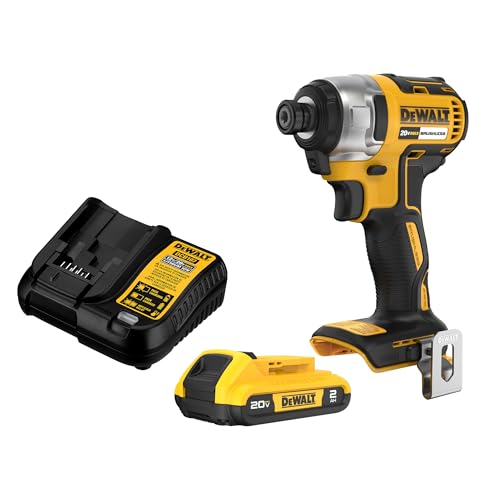
- A brushless motor gives longer runtime and durability.
- The compact, lightweight shape reaches into hard-to-reach areas.
- An LED light stays on for 20 seconds after the trigger is released, and the kit includes a 2Ah battery, charger, and belt hook.
CRAFTSMAN Cordless 1/4 Inch Impact Driver

- Up to 1,800 in-lbs of max torque handles fastening from deck screws to lag bolts.
- The driver can drive up to 120 fasteners on one charge with its 2 Ah lithium-ion battery.
- A variable speed trigger reaches up to 2,900 rpm with no load, and the chuck releases quickly for one-handed bit changes.
GoYwato 21V Brushless 1/4 Inch Impact Driver
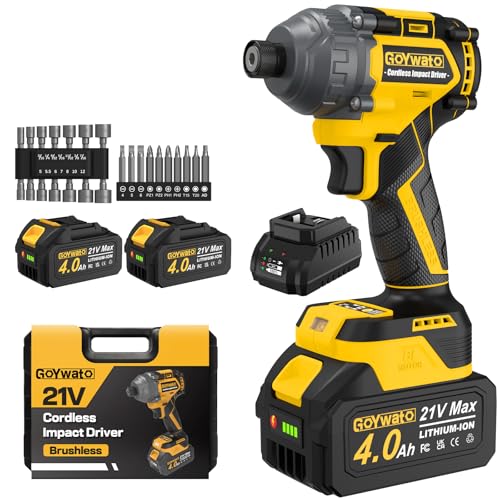
- A brushless motor delivers up to 2,655 in-lbs of torque while running quietly and cooler.
- Two 4.0Ah batteries and a charger come with the set, so one battery can charge while the other works.
- Forward and reverse modes cover tightening and disassembly, and the 1/4-inch all-metal hex chuck holds bits with a steel ball design.
Milwaukee 18V 1/4 Inch Hex Impact Driver

- Delivers up to 2,000 in-lbs of torque.
- Four-mode drive control lets the driver match different fastening jobs.
DEWALT 20V MAX Drill and Impact Driver Combo Kit

- This combo kit pairs a drill driver with an impact driver, so one kit covers drilling holes and driving fasteners.
- The motor delivers up to 300 UWO, while the impact driver delivers up to 1,400 in-lbs of torque.
- Both tools have a compact shape for tight areas, plus LED work lights with a 20-second delay.
Prime covers fast, free delivery on eligible items. See whether a Prime free trial is available for your account.
Check Prime on Amazon →



Write Your Review
No reviews yet. Be the first to share your experience!