
Buying a hammer drill is simpler when you start from the work rather than the shelf. The jobs you do most often decide how much power you need, whether a cord or a battery makes sense, and which accessories matter. Those choices fall in a natural order, from power and speed to comfort, safety, and storage. The common traps are worth knowing too: a tool that is too weak, too heavy, or missing the parts it needs. Check each point in turn, and the right model should stand out clearly.
Start With the Job
The best place to start is the work itself. Write down the jobs you expect to do in the next year, from the most common to the hardest. A hammer drill bought for occasional trim work needs far less power than one bought for daily masonry or metal cutting. When the job list is clear, the specs start to make sense, because you can see which numbers matter and which ones you can ignore.
Think about materials as well as tasks. Wood, drywall, and plastic are forgiving, while metal, tile, concrete, and brick demand more power and the right accessories. A tool that handles your hardest material comfortably will handle the easy ones without effort. Buying for the hardest regular job, rather than the average one, keeps you from outgrowing the tool in a few months.
Power and Speed
Motor power and speed range are the core specs to compare. A stronger motor holds its pace under load, which keeps cuts straight and drilling fast. A wide speed range lets you slow down for delicate materials and speed up for rough work. Look at both numbers together, since high speed without power behind it fades quickly when the tool meets resistance.
Variable speed control is worth seeking out. A dial or trigger that lets you adjust the pace gives you control over heat, dust, and cut quality. On some materials, running too fast scorches or chips the surface, while running too slow wastes time. A tool with several speed settings adapts to more jobs, which makes it more useful across a whole project.
Corded Against Cordless
Corded models run as long as the job lasts and usually cost less for the same power. They suit workshops and long sessions where an outlet is close by. The cord needs care, since it can snag or get in the way, yet for steady work it is a small price for unlimited run time. If your jobs stay in one place, corded is a strong choice.
Cordless models trade run time for freedom. They shine on ladders, roofs, and outdoor jobs where a cord would be a nuisance or a hazard. Check whether the model comes as a bare tool or a kit, since a kit with batteries and a charger costs more up front. If you already own batteries from the same system, a bare tool can be excellent value. Battery size also matters, since larger batteries run longer but weigh more.
Comfort and Safety
Comfort is not a luxury on a tool you hold for hours. A grip that fits your hand, a balanced body, and a switch that falls naturally under your fingers all reduce fatigue and mistakes. Side handles add control on powerful models, and vibration control keeps your hands steadier through long sessions. If you can hold the tool before buying, trust what your hands tell you.
Safety features deserve the same attention. A guard that adjusts easily, a lock-on switch, and overload or kickback protection all help when something binds or catches. Wear eye protection and a dust mask for every job, and keep gloves snug so they cannot catch on moving parts. A safe routine matters as much as any feature built into the tool.
Accessories and Storage
Accessories turn a single hammer drill into a versatile kit. Blades, discs, sanding pads, and bits each suit different materials, so check that the ones you need are easy to buy and fairly priced. Tool-free changes save time on jobs that need several swaps, and a universal fitting opens up more choices. Buy the accessories for your most common materials first and add others as new jobs appear.
Storage matters too, especially if the tool travels. A case keeps the tool, batteries, and accessories together and protects them from dust and knocks. Even at home, a case or a shelf spot keeps the tool clean and ready. A tool that lives in a damp corner or under a pile of other gear will wear out faster, so give it a proper home.
Trying the Tool Before You Buy
Holding a hammer drill before you buy tells you things no spec sheet can. Notice the grip shape, the weight, and where the balance point sits. Reach for the switch and the speed control, and see whether they fall naturally under your hand. A tool that feels awkward in the shop will feel worse after an hour of work, so trust what your hands tell you.
If you cannot hold the tool, read the dimensions and weight with care and picture your workspace. Compare the length against the tightest spot you work in, and compare the weight against tools you already own. A tool that is much heavier than your current ones will tire you faster, while a compact one may fit where a larger model cannot. These simple comparisons help when holding the tool is not possible.
Frequently Asked Questions
How much power do I need? Enough to handle your hardest regular material without stalling. For light home repairs, a modest motor is fine. For masonry, thick metal, or daily use, look for a stronger motor and a wide speed range. When in doubt, choose a little more power than you think you need, since an underpowered tool is frustrating every time you use it.
Is a kit better than a bare tool? A kit is better when you need the battery, charger, case, or accessories it includes. A bare tool is better when you already own those parts. Compare the total cost of the bare tool plus the missing pieces against the kit, and buy whichever is lower for the same result.
Related products
The six hammer drills below show different mixes of power, comfort, and accessories. Compare them against the jobs on your list and the features covered in this article.
DEWALT 20V MAX SDS Rotary Hammer Drill
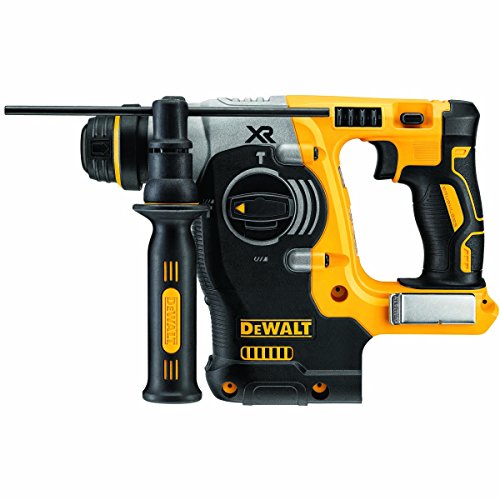
- A cordless SDS rotary hammer delivers 2.1 joules of impact energy for fast drilling in concrete.
- Three application modes suit different jobs, and active vibration control reduces vibration felt at the handles.
- A lightweight brushless design suits rod hanging, cable tray, and strut mounting work, and the bare tool fits owners who already own 20-volt MAX batteries.
CRAFTSMAN V20 Cordless Hammer Drill Kit

- A 1/2-inch cordless hammer drill with a high-performance motor produces 280 unit watts out for heavy-duty jobsite work.
- A 1/2-inch ratcheting chuck holds bits firmly, and the drill reaches 25,500 blows per minute for faster drilling in concrete and brick.
- The kit includes two batteries and a charger, and the tool is part of the V20 cordless system.
AOBEN 13 Amp SDS-Plus Rotary Hammer Drill

- A 13-amp, 1,500-watt motor delivers strong impact energy for heavy-duty work in concrete, masonry, and metal.
- Three modes switch between hammer only, hammer drill, and drill only, with double switch buttons for changing functions.
- The set includes three drill bits, a flat chisel, a point chisel, a carrying case, and spare carbon brushes.
DEKOPRO 1-1/4-Inch SDS-Plus Rotary Hammer Drill

- A 12.5-amp motor runs up to 1,000 revolutions per minute and 4,600 blows per minute, with 5.5 joules of impact energy.
- Four modes cover drill only, chiseling only, hammer drill, and chisel rotation for concrete, brick, masonry, metal, and wood.
- A safety clutch helps prevent overload, and a 360-degree adjustable auxiliary handle improves handling and balance.
DCK 20V Brushless Hammer Drill

- A brushless 20-volt motor outputs 600 watts and delivers 531 inch-pounds of torque for demanding tasks.
- An impact rate of 36,000 impacts per minute drives fast drilling in brick and other tough materials.
- Two speed settings run up to 550 and 2,200 revolutions per minute, with a 22+1+1 torque clutch and a 4.0-amp-hour battery.
ENEACRO 1-1/4-Inch SDS-Plus Rotary Hammer Drill

- A 13-amp motor delivers 5.5 foot-pounds (7.4 joules) of impact energy for heavy-duty concrete work.
- Four functions cover drill only, hammer only, hammer drill, and chisel rotation, with a maximum drilling diameter of 1.25 inches in concrete and 0.5 inch in metal.
- A safety clutch protects the wrist from high torque, and a 360-degree adjustable handle suits different working positions.
Prime covers fast, free delivery on eligible items. See whether a Prime free trial is available for your account.
Check Prime on Amazon →



Write Your Review
No reviews yet. Be the first to share your experience!