
An angle grinder is a working tool, and like any working tool it wears out over time. How long it lasts depends on the build quality, how hard you push it, and how well you look after it between jobs. This article explains what a typical service life looks like, which parts wear out first, and which habits shorten or extend the life of the motor, the switch, and the moving parts. It also covers when a repair makes sense and when replacement is the wiser move.
Typical Service Life
How long an angle grinder lasts depends on build quality, workload, and care. A well-made model used for light home repairs can serve for many years, while the same model used daily on a job site will wear out sooner. An estimated service life for a home workshop tool is several years of regular use, though heavy professional use shortens that span. The range is wide, so treat any single number as a rough guide rather than a promise.
Frequency is the biggest factor. A tool used once a month faces far less wear than one used every day, and a tool that works hard materials wears faster than one that works soft wood. Heat is the other enemy, since long sessions at full load wear motors and bearings faster than short jobs with breaks. A tool that gets rest between cuts will usually outlast one that runs nonstop.
What Wears Out First
The parts that wear first are usually the ones that move or carry load. Switches and triggers see constant use and can grow loose or sticky over time. Carbon brushes wear down with use on many corded models, and bearings wear when dust gets past the seals. Cords fray where they bend near the plug or the tool body, and batteries lose capacity with age and charge cycles.
Accessories wear faster than the tool itself. Blades dull, discs wear down, and bits lose their edge, which is normal and expected. A tool that feels weak may simply need a fresh accessory rather than a replacement. Check the accessory first when performance drops, since a new blade or disc often restores the tool to full strength at little cost.
Habits That Shorten Life
Pushing the tool past its limits is the fastest way to shorten its life. Forcing a cut, leaning on the tool, or running it at full load for long stretches builds heat that wears the motor and bearings. Using the wrong accessory for the material has the same effect, since the tool works harder than it should. Let the tool do the work at its own pace, and it will last far longer.
Poor storage shortens life too. A tool left in a damp shed, covered in dust, or tossed in a pile with other gear will corrode, clog, and wear faster. Dust in the vents blocks cooling air, which raises heat and wears the motor. A quick clean and dry storage after each job costs minutes and adds years to the tool.
Habits That Extend Life
The habits that extend life are simple. Clean the tool after each use, keep the vents clear, and store it dry. Use the right accessory for the material, and replace dull blades and discs promptly so the motor never has to fight. Let the tool cool during long jobs, and unplug it or remove the battery before changing accessories. These small steps keep the motor, switch, and bearings in good shape.
Batteries deserve care too. Store them charged but not hot, keep them dry, and avoid leaving them flat for months. A battery that is looked after holds its charge longer and powers the tool better. Cords need care as well, so coil them loosely and keep them away from sharp edges and heat. A tool that is treated well repays the care with years of steady service.
When Repair Makes Sense
Repair makes sense when the fault is small and the tool is otherwise sound. A worn cord, a tired switch, or a set of brushes can often be replaced for far less than a new tool, and the repair returns the tool to full working order. If the tool is a model you like and the parts are easy to find, repair is usually the wiser move. A quick check of parts availability before you decide saves a wasted trip.
Replacement makes more sense when the motor itself has failed, the housing is cracked, or several parts need work at once. At that point the repair cost can approach the cost of a new tool, and the repaired tool may still have worn parts elsewhere. A tool that has served for many years and shows several signs of wear at once has usually earned its retirement. Replace it and start fresh with a model that fits your current work.
Normal Wear Against Real Trouble
Not every change in an angle grinder means trouble. A blade that dulls, a disc that wears down, and a battery that holds a little less charge are all normal wear, and they are fixed by replacing the worn part. A tool that still runs smoothly with fresh accessories is healthy, even if it has seen years of use. Learning to tell normal wear from real trouble saves money and worry.
Real trouble shows up as changes in the tool itself rather than the accessory. Fading power with a fresh blade, new vibration, overheating on light work, or a switch that misbehaves all point inside the tool. Two or more of these signs together usually mean the tool is near the end of its useful life. When the signs point inside the tool, replacement is usually the wiser move.
Frequently Asked Questions
How do I know if my angle grinder is wearing out? Look for fading power, new vibration, unusual heat, or a switch that feels loose or sticky. Any one of these signs can mean wear, and two or more together usually mean the tool is near the end of its useful life. A fresh accessory can rule out dull blades or discs as the cause.
Does heavy use always shorten life? Heavy use wears a tool faster, yet a well-made tool built for the work can handle it for years. The key is matching the tool to the workload and giving it rest and care between jobs. A light homeowner model pushed into daily professional work will wear out far sooner than a model built for that load.
Related products
The six angle grinders below show different mixes of power, comfort, and accessories. Compare them against the jobs on your list and the features covered in this article.
Bosch 4-1/2-Inch Angle Grinder GWS8-45

- A 7.5-amp motor delivers 11,000 revolutions per minute with no load.
- A slim grip shape keeps the tool comfortable in hand during long grinding sessions.
- Durable carbon brushes support extended tool life, and a two-position side handle adds control.
SKIL 6 Amp 4-1/2-Inch Angle Grinder
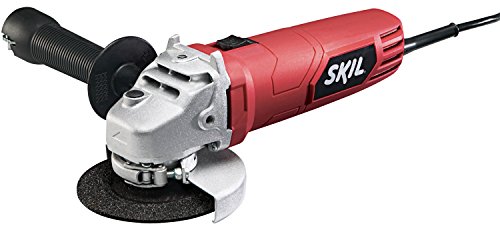
- A 6.0-amp motor spins at 11,000 revolutions per minute.
- A tool-less guard adjusts quickly, and a heavy-duty metal gear housing adds ruggedness.
- A compact grip shape keeps the tool comfortable and easy to control.
Milwaukee M18 FUEL Cordless Angle Grinder

- An electronic clutch guards against kickback, and overload protection helps the motor last longer.
- An anti-vibration side handle improves comfort and safety during grinding.
- The cordless body works with all M18 batteries in the system.
DongCheng 4-1/2-Inch Angle Grinder

- A 6.7-amp, 800-watt pure copper motor reaches up to 11,800 revolutions per minute.
- At 4.2 pounds with a slim, non-slip grip, the tool stays light in hand, and the 8-foot cord reaches across a work area.
- Two tool-free guards swap in for cutting or grinding, and the standard 5/8-inch-11 spindle thread fits common discs.
WEN 7-Amp Angle Grinder

- A 7-amp motor generates up to 11,000 revolutions per minute.
- A lightweight body with a rubber grip lining stays comfortable during longer jobs.
- An arbor adapter fits grinding wheels with 5/8-inch and 7/8-inch arbors, and the reversible handle mounts on either side.
Makita 4-1/2-Inch Paddle Switch Angle Grinder

- A 7.5-amp motor packs high output into a compact tool that weighs only 4.5 pounds.
- A small barrel grip of only 2-1/2 inches across adds comfort and control.
- Labyrinth construction seals the motor and bearings against dust and debris, and a lock-on switch allows continuous operation.
Prime covers fast, free delivery on eligible items. See whether a Prime free trial is available for your account.
Check Prime on Amazon →


Write Your Review
No reviews yet. Be the first to share your experience!