
Tools rarely fail without warning. A hammer drill usually gives clear signs that it is wearing out long before it stops altogether, from fading power and new vibrations to heat, noise, and a switch that no longer feels right. This article explains the warning signs worth watching, what each one usually means, and how to tell normal wear from a problem that needs attention now. Catching these signs early lets you replace the tool on your schedule instead of in the middle of a job.
Loss of Power
Fading power is often the first sign that a hammer drill is wearing out. The tool spins up more slowly, stalls on material it once handled easily, or needs more pressure to cut at the same pace. Before you blame the tool, fit a fresh blade, disc, or bit, since a dull accessory causes the same symptoms. If a fresh accessory does not restore the power, the motor or brushes are likely wearing.
A cordless model that loses power may simply have a tired battery. Try a different battery from the same system if you own one, and see whether the power returns. A battery that charges fast yet runs flat quickly has usually reached the end of its useful life. If the tool is weak on every battery, the problem sits in the tool itself and replacement may be near.
Excess Vibration and Noise
New vibration or noise is a warning worth listening to. A hammer drill that shakes more than it used to, rattles, or grinds may have worn bearings, a loose part, or a damaged accessory. Check the accessory first, since a bent blade or a cracked disc can cause both vibration and noise. If the accessory is sound and the shaking stays, the fault is likely inside the tool.
Grinding or clicking sounds are more serious than a simple hum. They can mean worn gears or bearings that will fail if the tool keeps running. Stop the tool, unplug it or remove the battery, and look for loose parts or damage. A tool that sounds wrong should not be pushed through a job, since a small fault can turn into a broken tool or an injury.
Overheating
A hammer drill that runs hot is telling you something. Some warmth is normal after a long session, yet a tool that becomes too hot to hold, smells hot, or shuts down is overheating. Clogged vents are a common cause, since dust blocks the cooling air the motor needs. Clean the vents and let the tool cool, then try a shorter session to see whether the heat returns.
Overheating can also mean the motor is working too hard. A dull accessory, the wrong accessory for the material, or forcing the cut all raise the load and the heat. Fit a fresh accessory, ease off the pressure, and give the tool rest breaks during long jobs. If the tool still overheats on light work with clean vents, the motor is likely wearing out.
Worn Switches and Controls
Switches and triggers wear with every use, and their feel changes as they age. A switch that sticks, needs a hard press, or fails to lock on is wearing out. A speed dial that slips or a trigger that no longer gives smooth control makes the tool harder to use safely. These faults often start small and grow worse, so do not ignore them.
A faulty switch is also a safety issue, since a tool that starts unexpectedly or will not stop is dangerous. If the switch misbehaves, stop using the tool until it is repaired or replaced. A switch repair can be worthwhile on an otherwise sound tool, yet a tool with several worn controls at once is usually near replacement.
Damage to Housing or Cord
Cracks, melted spots, or loose housing panels mean the tool has taken damage or heat it should not have. A cracked housing can let dust into the motor and bearings, and it may expose electrical parts. A frayed or nicked cord is a safety hazard that should be fixed before the next use. Look over the housing and cord each time you pick the tool up, since damage is easy to miss in a busy workshop.
Damage often follows a drop or a knock, and it can hide internal harm. A tool that fell from a ladder may look fine yet have a cracked gear housing or a bent shaft inside. If the tool vibrates, rattles, or runs rough after a fall, have it checked or replace it. A tool with visible damage to the housing or cord should not be used until the damage is dealt with.
Testing Before You Decide
Before you replace a hammer drill, run a simple test to confirm the problem. Fit a fresh blade, disc, or bit, clean the vents, and try the tool on a scrap piece of the material you work with most. If the power, vibration, and heat all return to normal, the problem was the accessory or the dust, not the tool. This test takes minutes and can save the cost of a new tool.
If the test does not help, try a different battery on a cordless model or a different outlet on a corded one. A weak battery or a poor connection can mimic a dying tool. When the tool still struggles after fresh accessories, clean vents, and a good power source, the wear is real and replacement is the sensible move. A short test keeps the decision based on evidence rather than guesswork.
Frequently Asked Questions
Should I replace my hammer drill at the first sign of trouble? Not always. A dull accessory, a clogged vent, or a tired battery can mimic serious wear, and fixing those is cheap. Replace the accessory, clean the tool, and test it again before you decide. If the signs stay after those simple fixes, replacement is likely the right move.
Is it safe to keep using a tool that vibrates more than before? No, excess vibration can mean a damaged accessory or worn bearings, and both can fail during use. Stop the tool, check the accessory, and look for loose parts. If the cause is not clear, have the tool checked before you use it again.
Related products
The six hammer drills below show different mixes of power, comfort, and accessories. Compare them against the jobs on your list and the features covered in this article.
DCK 20V Brushless Hammer Drill

- A brushless 20-volt motor outputs 600 watts and delivers 531 inch-pounds of torque for demanding tasks.
- An impact rate of 36,000 impacts per minute drives fast drilling in brick and other tough materials.
- Two speed settings run up to 550 and 2,200 revolutions per minute, with a 22+1+1 torque clutch and a 4.0-amp-hour battery.
ENEACRO 1-1/4-Inch SDS-Plus Rotary Hammer Drill

- A 13-amp motor delivers 5.5 foot-pounds (7.4 joules) of impact energy for heavy-duty concrete work.
- Four functions cover drill only, hammer only, hammer drill, and chisel rotation, with a maximum drilling diameter of 1.25 inches in concrete and 0.5 inch in metal.
- A safety clutch protects the wrist from high torque, and a 360-degree adjustable handle suits different working positions.
Hammerhead 7.5-Amp 1/2-Inch Hammer Drill

- A 7.5-amp motor tackles demanding drilling jobs, with a variable speed trigger and preset selector for control.
- A keyless 1/2-inch metal chuck makes frequent bit changes easy.
- Two functions switch quickly between drilling and hammer drilling, and the tool is not made for reinforced concrete walls.
Deshuo 1-Inch SDS-Plus Rotary Hammer Drill
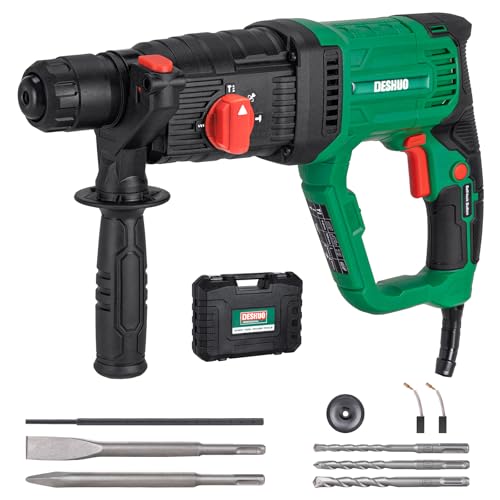
- A 9-amp motor delivers up to 1,100 revolutions per minute and 5,300 blows per minute, with 3 joules of impact energy for fast drilling in concrete.
- At 7.19 pounds, the light body suits overhead or downward drilling, and the SDS-Plus system changes bits without tools. It takes SDS-Plus bits only.
- Four modes cover rotary hammer drilling, rotary-only drilling, hammer-only work, and chisel position adjustment.
DEWALT 20V MAX SDS Rotary Hammer Drill
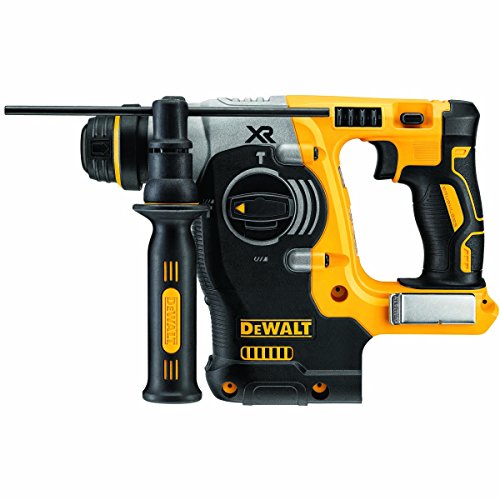
- A cordless SDS rotary hammer delivers 2.1 joules of impact energy for fast drilling in concrete.
- Three application modes suit different jobs, and active vibration control reduces vibration felt at the handles.
- A lightweight brushless design suits rod hanging, cable tray, and strut mounting work, and the bare tool fits owners who already own 20-volt MAX batteries.
CRAFTSMAN V20 Cordless Hammer Drill Kit

- A 1/2-inch cordless hammer drill with a high-performance motor produces 280 unit watts out for heavy-duty jobsite work.
- A 1/2-inch ratcheting chuck holds bits firmly, and the drill reaches 25,500 blows per minute for faster drilling in concrete and brick.
- The kit includes two batteries and a charger, and the tool is part of the V20 cordless system.
Prime covers fast, free delivery on eligible items. See whether a Prime free trial is available for your account.
Check Prime on Amazon →



Write Your Review
No reviews yet. Be the first to share your experience!